

Dr. Lukas "Skull" Kraljić
Senior Doctor, Psychological Expert
Born in the Istrian region of Croatia, Lukas Kraljić developed an interest in psychology at a young age. While many of his peers pursued traditional medical careers, Kraljić became fascinated by the effects extreme situations could have on the human mind. This interest eventually led him to pursue higher education in psychology and psychiatry, specializing in trauma treatment and stress-related disorders.
During his career he worked with trauma victims, military personnel, and individuals exposed to extreme psychological stress.
Prior to Foundation recruitment, Kraljić worked alongside various government and emergency response organizations, assisting individuals suffering from severe psychological trauma. Throughout his career, he earned a reputation for remaining calm in situations that would leave others overwhelmed. Colleagues frequently described him as approachable, professional, and unusually difficult to intimidate.
His recruitment into the Foundation came after assisting in the aftermath of an anomalous incident. While many responders focused on physical casualties, Kraljić's reports accurately documented the long-term psychological effects experienced by survivors. Foundation personnel reviewing the case identified his work as unusually thorough and recommended him for recruitment.
Several years into Foundation service, Dr. Kraljić was assigned to evaluate personnel following exposure to a low-level cognitohazard. During one evaluation session, a containment failure occurred. While evacuating personnel and securing affected records, he was exposed to a visual anomaly that caused severe damage to his left eye and surrounding optic nerves.
The injury left the eye beyond conventional medical repair.
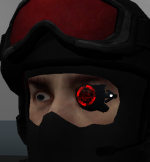
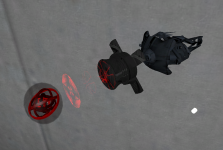
Given his extensive experience in anomalous psychology and memetic screening, the Foundation authorized the implantation of an experimental ocular prosthesis developed jointly by Medical and Research personnel.
Unlike military-grade cybernetics, the prosthetic was designed specifically for medical and psychological work. The implant assists with recording interviews, monitoring subtle physiological indicators, and documenting evaluations for Foundation review. While highly effective, it requires regular maintenance and has been known to cause migraines following prolonged periods of use.
Following the implantation procedure, personnel jokingly remarked that the exposed metallic components around the orbital socket made Dr. Kraljić resemble a medical anatomy diagram. The nickname "Skull" became spread through the site and eventually stuck.
The incident and his subsequent recovery marked a turning point in Kraljić's career. Offered the opportunity to retire from active service, he declined. Instead, he requested reassignment to continue working within Foundation facilities. According to personnel records, his justification was simple:
"I've seen what happens when containment fails. If I can help even one person walk away from that with their mind intact, then I'm staying."
Senior Doctor, Psychological Expert
Born in the Istrian region of Croatia, Lukas Kraljić developed an interest in psychology at a young age. While many of his peers pursued traditional medical careers, Kraljić became fascinated by the effects extreme situations could have on the human mind. This interest eventually led him to pursue higher education in psychology and psychiatry, specializing in trauma treatment and stress-related disorders.
During his career he worked with trauma victims, military personnel, and individuals exposed to extreme psychological stress.
Prior to Foundation recruitment, Kraljić worked alongside various government and emergency response organizations, assisting individuals suffering from severe psychological trauma. Throughout his career, he earned a reputation for remaining calm in situations that would leave others overwhelmed. Colleagues frequently described him as approachable, professional, and unusually difficult to intimidate.
His recruitment into the Foundation came after assisting in the aftermath of an anomalous incident. While many responders focused on physical casualties, Kraljić's reports accurately documented the long-term psychological effects experienced by survivors. Foundation personnel reviewing the case identified his work as unusually thorough and recommended him for recruitment.
Several years into Foundation service, Dr. Kraljić was assigned to evaluate personnel following exposure to a low-level cognitohazard. During one evaluation session, a containment failure occurred. While evacuating personnel and securing affected records, he was exposed to a visual anomaly that caused severe damage to his left eye and surrounding optic nerves.
The injury left the eye beyond conventional medical repair.
Given his extensive experience in anomalous psychology and memetic screening, the Foundation authorized the implantation of an experimental ocular prosthesis developed jointly by Medical and Research personnel.
Unlike military-grade cybernetics, the prosthetic was designed specifically for medical and psychological work. The implant assists with recording interviews, monitoring subtle physiological indicators, and documenting evaluations for Foundation review. While highly effective, it requires regular maintenance and has been known to cause migraines following prolonged periods of use.
Following the implantation procedure, personnel jokingly remarked that the exposed metallic components around the orbital socket made Dr. Kraljić resemble a medical anatomy diagram. The nickname "Skull" became spread through the site and eventually stuck.
The incident and his subsequent recovery marked a turning point in Kraljić's career. Offered the opportunity to retire from active service, he declined. Instead, he requested reassignment to continue working within Foundation facilities. According to personnel records, his justification was simple:
"I've seen what happens when containment fails. If I can help even one person walk away from that with their mind intact, then I'm staying."
Loyalty to the Foundation
Dr. Lukas "Skull" Kraljić's loyalty to the Foundation stems not from ideology or blind obedience, but from experience.
Throughout his career, Kraljić has worked with personnel exposed to anomalies ranging from harmless curiosities to events capable of permanently altering or destroying lives. He has interviewed survivors, treated victims of anomalous incidents, and witnessed the long-term psychological consequences of containment failures.
These experiences led him to a single conclusion:
While Kraljić does not agree with every decision made by the Foundation, he firmly believes that no other organization possesses the resources, expertise, or discipline required to protect humanity from anomalous threats. As a result, he remains deeply committed and loyal to the Foundation's mission.
He is known to defend Foundation personnel during investigations, often arguing that many of the organization's harshest actions are performed out of necessity rather than malice.
When asked why he continues working despite the dangers, Kraljić's response is typically:
"Because every person who walks out of this facility alive and sane is proof that our work matters."
PAC Requested (Which job):Sr. Doctor/Med department
Steam ID:76561198822391242
Photograph of PAC: The image has been provided by a person im commisioning for my pac3(Maksim) as a sample image of what the eye is going to look like, the eye is subject to changes (colours and slight apearance changes so its unique) (ignore the guard since it will be used for a Doctor)

 Head Moderator
 SCP-RP Staff
 Content Team